The 3 reasons generational wealth fails — and what we can do about it.
We work hard to build a life.
We buy homes. We grow businesses. We save for retirement. We make sacrifices so that our children and grandchildren might have opportunities we never had.
But here is a question worth asking:
Are we building wealth that will last, or simply accumulating assets without a plan for what happens next?
Building generational wealth is not just about how much we leave behind. It is also about how effectively we protect, transfer and prepare the next generation to manage what they inherit.
And that is where things can go wrong.
A family can have a valuable home, substantial savings and a carefully accumulated investment portfolio, yet still encounter unnecessary complications when it comes time to transfer those assets.
The good news? Many of these risks can be addressed before they become problems.
Here are three places to start.
1. No Plan — Or a Plan That No Longer Reflects Your Life
Life changes. Our estate plans should change with it.
Marriage, divorce, the birth of a grandchild, the sale of a business, a new property or a significant change in financial circumstances can all affect our estate planning needs.
Yet many people continue relying on documents prepared years ago, assuming that what worked then will work just as well today.
Others postpone making a will altogether.
Without an appropriate, up-to-date estate plan, our families may face uncertainty about our intentions, delays in administering our estate and disputes that could have been avoided.
What we can do about it:
- Make sure we have a valid will that reflects our current circumstances and wishes.
- Review our estate plan after major life changes.
- Consider how our home, investments, business interests and other assets will be transferred.
- Understand how beneficiary designations and jointly owned assets interact with our broader estate plan.
- Seek legal advice to ensure our arrangements reflect our intentions and applicable law.
Estate planning is not a document we complete once and forget.
It is part of managing the life and legacy we are building.
2. Choosing the Wrong Executor
The person we trust most may not be the person best equipped to manage our estate.
This is one of the most overlooked decisions in estate planning.
An executor is responsible for administering an estate in accordance with the will and applicable law. Depending on the estate, the role may involve identifying and valuing assets, dealing with debts and taxes, communicating with beneficiaries, managing property and distributing the remaining estate.
It can be a demanding responsibility.
Yet people sometimes choose an executor based primarily on family relationships, birth order or the assumption that the oldest child should take the role.
Trust matters. But trust alone is not enough.
The right executor also needs to be capable of handling financial and administrative responsibilities, communicating effectively, remaining impartial where possible and managing difficult conversations.
Consider these questions:
- Does the person understand the responsibilities involved?
- Are they organized, dependable and capable of handling complex paperwork?
- Can they manage potential disagreements between beneficiaries?
- Do they have the time and willingness to take on the role?
- Would they be able to act responsibly during an emotionally difficult period?
A well-intentioned person may still be the wrong choice for the job.
What we can do about it:
Choose an executor based on suitability, not simply family expectations.
Discuss the role with the person before naming them. Explain what the responsibility involves and consider whether a professional executor or other appropriate arrangement might be more suitable for a complex estate.
Also, identify an alternate executor in case our first choice is unable or unwilling to act.
The objective is not to create a perfect family arrangement. It is to make the administration of our estate as clear and manageable as reasonably possible.
Our legacy deserves more than a name written into a will. It deserves a thoughtful decision about who will carry out our wishes.
3. Leaving Assets Without Preparing the People Who Will Inherit Them
We often concentrate on what we will leave behind.
But what about the people who will receive it?
An inheritance can create opportunities, but it can also introduce responsibilities and complications that beneficiaries may not be prepared to manage.
A family home may need to be sold or transferred. An inherited investment portfolio may require careful management. A business may need a succession plan. Different expectations among siblings may lead to disagreements about what should happen next.
And when family members do not understand the intentions behind an estate plan, even a carefully prepared will may not prevent conflict.
What we can do about it:
- Have appropriate conversations about our intentions and priorities.
- Prepare a succession plan for any business or significant family asset.
- Help the next generation develop financial literacy and responsible decision-making skills.
- Consider whether our estate plan should include specific arrangements for beneficiaries who need additional protection or support.
- Make sure important documents and professional contacts can be located when needed.
We do not have to disclose every financial detail to every family member.
However, thoughtful preparation can help reduce uncertainty and give the next generation a better foundation for managing what they receive.
Because the real measure of generational wealth is not simply what passes from one generation to the next.
It is what the next generation is equipped to preserve, use and build upon.
THE ESTATE PLANNING REALITY CHECK
If something happened tomorrow, would your family know what to do? Take our quiz to find out https://go.dosslaw.ca/who-should-be-the-executor-of-your-will

If you have not reviewed your will recently, are uncertain about your choice of executor, or want to ensure your arrangements reflect your current circumstances, consider booking a conversation with Marlenne Doss to discuss your estate-planning questions.
Next Steps
Planning isn’t just about documents; it’s about peace of mind. It’s about knowing your loved ones will be cared for and your wishes respected. If you haven’t started, or if it’s been a while since you reviewed your plan, now is the time.
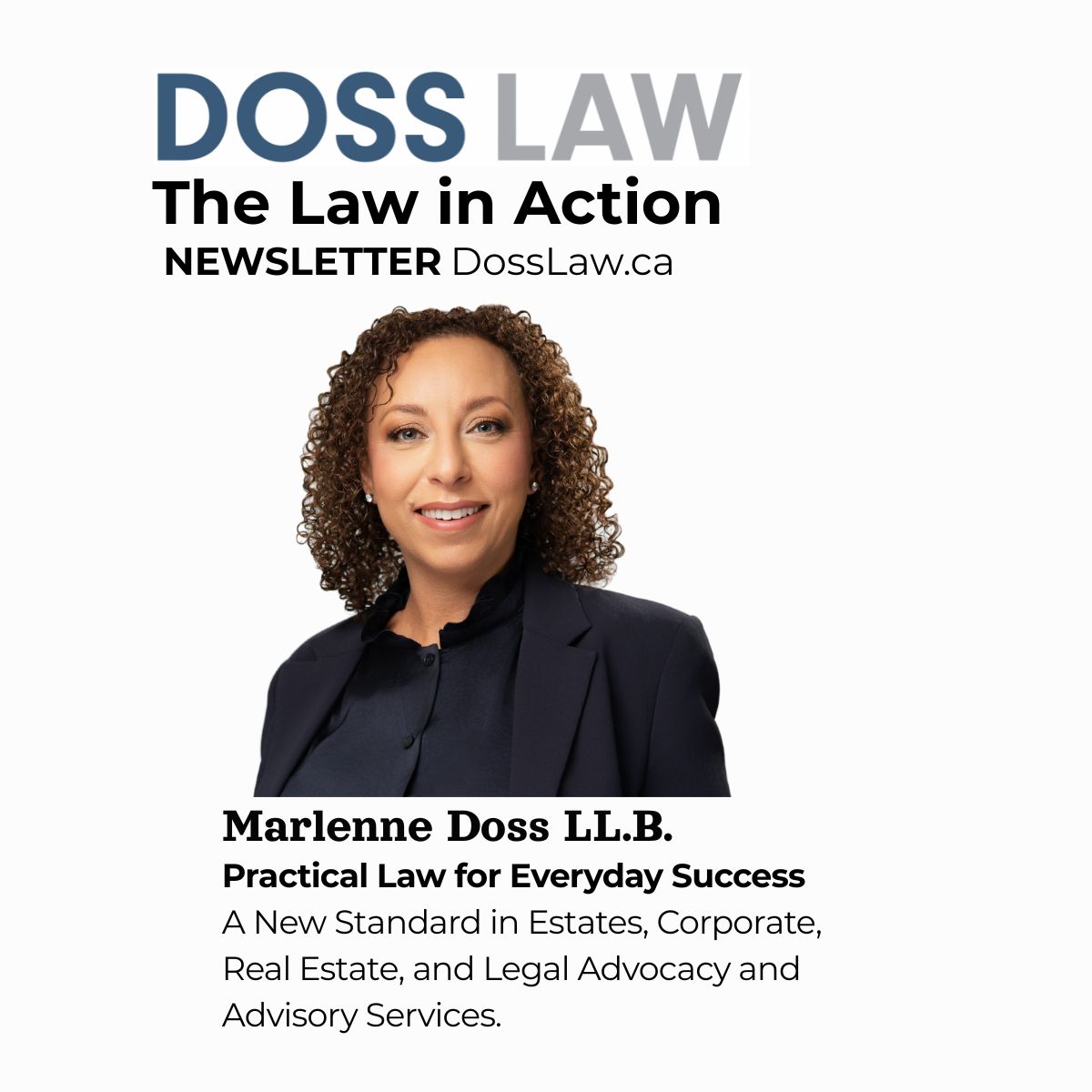
Marlenne Doss, LL.B., Hons. BSc. Founder, Doss Law. Protecting what you’ve built. Preserving what you love.
Life changes quickly—make sure your estate plan keeps up. Call DOSS LAW today to update or create yours. 416-502-2060 or visit www.dosslaw.ca or send an email to info@dosslaw.ca.
Disclaimer
The information provided in this newsletter, including all checklists, articles, and strategy suggestions, is for educational and informational purposes only. It is designed to highlight general trends and considerations regarding estate planning, Wills, and Powers of Attorney under the laws of Ontario, Canada.
#EstatePlanning #LegacyDesign #DossLaw #FamilySovereignty #WillsAndEstates #WomenInLeadership #PowerOfAttorney #PowerfulWomenToday